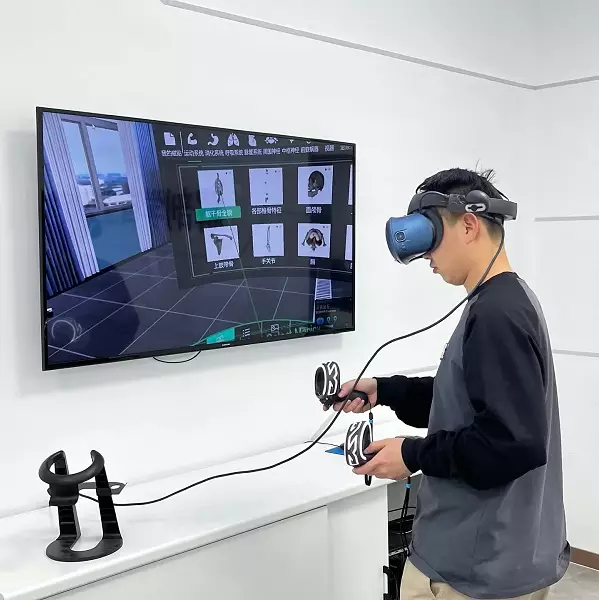
In an era where technology enhances educational methodologies, human anatomy VR for institutions presents an exciting opportunity for medical schools and educational facilities. The immersive experience provided by virtual reality aids students in understanding complex anatomical structures, ultimately enhancing their learning process. Among the innovators in this field is DIGIHUMAN, a company dedicated to advancing medical education through technological integration.
Revolutionizing Anatomy Learning with VR
Human anatomy VR for institutions allows students to explore bodily systems and structures in a three-dimensional environment. With DIGIHUMAN, students can interactively navigate through anatomy, identifying organs and systems with unparalleled clarity. The immersive learning helps bridge the gap between theoretical knowledge and practical understanding, fostering a deeper comprehension of human anatomy.
Cutting-Edge Technology in VR Equipment
The VR experience is powered by state-of-the-art Vive glasses, offering a combined resolution of 2160 x 1200 pixels for crystal-clear visuals. With a refresh rate of 90 Hz and a field of view of 110 degrees, students can engage fully with their learning material. Features like Steam VR tracking technology and built-in sensors enhance the realism of the human anatomy VR for institutions, ensuring an accurate and engaging experience.
Enhancing Learning Outcomes
Utilizing DIGIHUMAN’s VR-based anatomy equipment significantly improves students’ retention rates and understanding of anatomical concepts. The ability to manipulate anatomical structures allows learners to visualize their studies dynamically, paving the way for better performance in practical scenarios. Improved interaction with the material leads to enhanced critical thinking and application abilities in clinical settings.
Conclusion
Human anatomy VR for institutions represents a significant advancement in educational tools. As medical institutions seek to adopt innovative teaching methodologies, DIGIHUMAN stands at the forefront of this transition, equipping learners with the resources needed for a profound understanding of human anatomy. By leveraging immersive technology, educators can provide students with an enriched learning experience that extends beyond traditional classroom limits.
