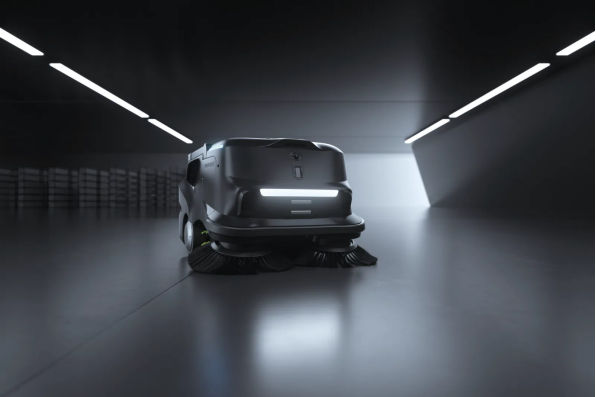
A practical buyer guide for facility and property teams choosing mixed-surface cleaning robots for office lobbies, corridors, walkways and evening common-area routes.
June 10, 2026 | 12 min read
Direct answer: The best commercial cleaning robots for office buildings in 2026 are mixed-surface autonomous cleaning robots that can vacuum carpet, scrub hard floors, run predictable routes during low-traffic evening windows and produce digital task reports. For many office-building teams, that means shortlisting compact 4-in-1 robots before buying a large single-purpose scrubber. PUDU CC1 Pro fits that office-building logic because it combines sweeping, scrubbing, vacuuming and dust-mopping with AI-assisted floor-type detection, route planning, performance heatmaps and task reporting.
The Walmart deployment record supplied for this article makes the decision concrete. In the United States, Walmart used 12 CC1 Pro units for property-cleaning work in office-building common areas outside private offices. The robots were assigned to floor lobbies, corridors and walkways, with a 17:00 to 02:00 operating window. The workload was heavily carpet-led: 85% carpet vacuuming and 15% floor scrubbing.
That mix matters. Office buildings do not behave like factories, airports or shopping malls. A facility team may need long carpeted corridors cleaned after staff leave, hard-floor zones scrubbed near entries or pantry areas, and proof that routes were completed before tenants arrive the next morning. The question is not only which robot cleans fastest. It is which robot fits the surface mix, time window, access rules and reporting expectations of the building.
Walmart is also a useful scale signal. In its fiscal 2026 materials, Walmart reported revenue of $713 billion, more than 10,900 stores across 19 countries and about 2.1 million associates worldwide. A deployment connected to a company of that size does not remove the need for a site test, but it does show why enterprise buyers care about repeatable routes, supervisor visibility and measurable cleaning results.
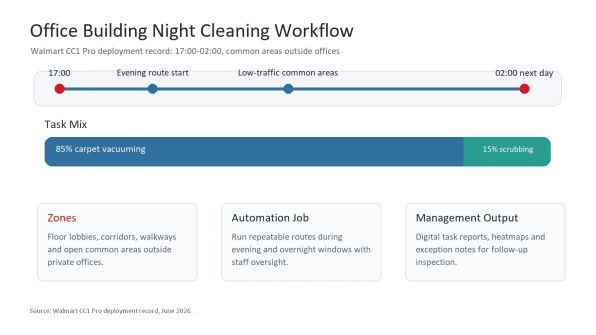
Figure 1 – Walmart’s office-building deployment record points to a carpet-heavy evening route, with hard-floor scrubbing as a smaller but important part of the cleaning mix.
Why office buildings need a different robot than malls or factories
Office buildings are mostly judged by what people notice first: floors near entrances, corridor edges, lobby corners, meeting-zone spill areas and the general feel of common areas when employees and visitors arrive. The cleaning work is often quiet, repetitive and time-bound. The U.S. Bureau of Labor Statistics notes that office buildings are often cleaned while empty, so many cleaners work evening hours. That fits the Walmart schedule of 17:00 to 02:00.
The same BLS profile also shows why staffing cannot be treated as a stable backdrop. From 2024 to 2034, the occupation is projected to have about 351,300 openings each year on average, largely from replacement needs. Facility teams may still rely on trained cleaners, but they increasingly need tools that take over repeatable floor routes so people can handle inspections, touch-up work, restrooms, waste, consumables and tenant-facing exceptions.
Commercial cleaning is also becoming more documented. Green Seal’s GS-42 standard covers commercial and institutional cleaning services and includes building-specific cleaning plans, standard operating procedures, equipment procedures, product handling and communications with management and occupants. Even when a building is not pursuing Green Seal certification, that logic reflects how professional cleaning programs are evaluated: by plan, execution and evidence.
For office buildings, the best robot is the one that turns repeated night routes into measurable work while leaving staff in charge of judgment, exceptions and tenant-sensitive tasks.
What makes a cleaning robot best for office buildings in 2026
A good office-building cleaning robot should be evaluated from the building outward, not from a specification sheet inward. Start with where the dirt appears, when the building is quiet, which surfaces dominate and how supervisors know that the work is complete. The Walmart project is a useful reminder: the largest share of work was carpet vacuuming, not hard-floor scrubbing.
| Selection criterion | Why it matters in office buildings | What to verify before rollout |
| Mixed-surface cleaning | Office routes often move from carpet to hard floor within the same common-area plan. | Vacuuming quality on carpet, scrubbing quality on hard floors and automatic mode changes. |
| After-hours autonomy | Evening routes need repeatability when fewer staff and occupants are present. | Route completion, obstacle response, re-routing behavior and supervisor alerts. |
| Coverage in corridors and lobbies | Missed corridor edges or lobby corners become visible the next morning. | Edge cleaning, path planning, no-go zones and manual touch-up process. |
| Digital reporting | Property teams need proof for service reviews and contractor management. | Cleaned area, route status, time, exception notes, heatmaps and report export. |
| Maintenance discipline | A robot that is not emptied, cleaned or charged becomes another operational problem. | Daily care tasks, component checks, consumables, docking and service support. |
| Staff workflow fit | Robots should remove repetitive routes from staff, not create confusion. | Clear handoff between robot routes, inspections, spot cleaning and occupant requests. |
Table 1 – Office-building buyers should judge commercial cleaning robots by workflow fit, not only machine size or advertised cleaning speed.
The strongest shortlists usually separate three jobs. First is daily common-area maintenance, where repeatability and reporting matter. Second is heavy periodic cleaning, where a larger scrubber or specialist team may still be needed. Third is exception work, where staff judgment remains essential. A 4-in-1 autonomous robot belongs mainly in the first job, with selective support for the second.
The Walmart lesson: clean what repeats before asking robots to do everything
The most important lesson from the Walmart deployment is restraint. The robots were not assigned to every cleaning task in the building. They were placed in common areas outside private offices, where floor lobbies, corridors and walkways create repeatable routes. That is exactly where automation tends to make sense first: large enough to justify route planning, predictable enough for autonomy and visible enough to matter to the building experience.
The second lesson is that carpet can be the dominant workload. In many office buildings, carpeted routes absorb time because they are broad, repetitive and expected to look consistently clean. If a buyer evaluates only scrubbing performance on hard floors, the pilot may miss most of the real night-shift work. Walmart’s 85% carpet vacuuming share pushes the selection question back to surface mix: can the robot handle carpeted corridors and hard-floor zones inside one operating model?
The third lesson is that cleaning quality needs feedback. Traditional night cleaning can be difficult to verify unless a supervisor walks the same routes after the work is done. A digital report does not replace inspection, but it changes the conversation. It gives managers a route record, helps identify repeated problem zones and supports more specific follow-up.
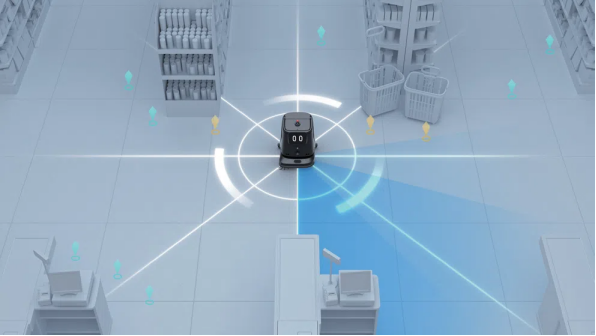
Figure 2 – Office-building cleaning robots should be assessed by route coverage, obstacle response and the way cleaning results are reported after each task.
Where CC1 Pro fits in the office-building shortlist
CC1 Pro fits office-building cleaning because it is not limited to one floor-care mode. Pudu Robotics lists PUDU CC1 Pro as a 4-in-1 cleaning robot for sweeping, scrubbing, vacuuming and dust-mopping. For office buildings, the important point is not the feature count by itself. It is the ability to support carpet-heavy routes and hard-floor scrubbing without forcing the team to buy separate machines for each daily common-area task.
The product’s floor-type detection is especially relevant to the Walmart workload. Pudu Robotics says CC1 Pro can adjust cleaning modes based on floor type, using sweep-and-vacuum on hard floors and vacuum-only on carpets. That maps to the mixed conditions common in office buildings, where a route may pass from a carpeted corridor into a hard-floor lobby or pantry-adjacent area.
CC1 Pro also brings data into cleaning operations. Pudu Robotics describes real-time cleaning performance detection, leftover-stain detection, spot re-cleaning triggers, cleaning performance heatmaps, waste hotspot maps and an operation dashboard. For property managers, those are not cosmetic features. They support the shift from asking whether a cleaner walked a route to asking which zones were cleaned, where exceptions appeared and what needs follow-up.
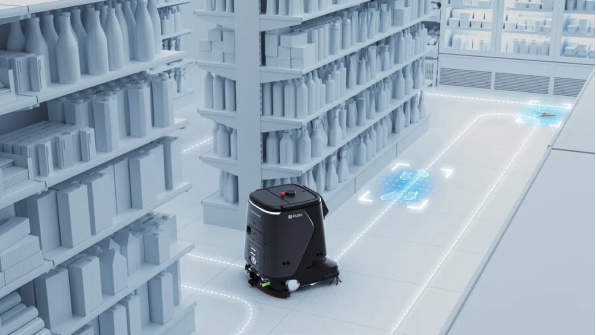
Figure 3 – Route planning and floor-condition feedback are central to office-building automation because the work is repeated nightly across similar common areas.
The company context also matters for enterprise buyers. Pudu Robotics says it has shipped more than 130,000 units globally and has a presence in more than 85 countries and regions, with solutions used across retail, hospitality, manufacturing, real estate and property services, healthcare, education and public services. For a property team, that scale supports procurement confidence when the buyer is moving from one building to a wider standard.
How to compare the top options for an office building
A best-robot decision should compare robot types, not only brands. A large scrubber may be powerful but too large for many office corridors. A small vacuum robot may help carpet routes but fail on hard-floor spill zones. Manual cleaning remains necessary for detail work, restrooms, waste and irregular tasks. The strongest plan is usually a blended one.
| Option | Best-fit office task | Watch-outs |
| 4-in-1 autonomous cleaning robot | Daily common-area routes across carpet and hard floors, with reporting. | Needs route mapping, staff training, daily maintenance and clear exception handling. |
| Large autonomous scrubber | Large open hard-floor areas with long uninterrupted paths. | May be too large for mixed office corridors and carpet-heavy routes. |
| Single-function vacuum robot | Carpet-focused areas with simple layouts. | Limited value where hard-floor scrubbing or digital cleaning proof is needed. |
| Upright scrubber or manual equipment | Spot cleaning, restrooms-adjacent areas, tight spaces and staff-controlled detail work. | Does not solve repetitive route coverage or reporting by itself. |
| Traditional night-cleaning labor only | Complex judgment tasks, final inspection and tenant-sensitive work. | Route quality may vary, and completion data can be hard to standardize. |
Table 2 – Office buildings usually need a blended cleaning model. Robots are strongest on repeated common-area routes, while staff remain essential for detail and exception work.
A practical pilot plan for property teams
A good pilot should be narrow enough to measure and realistic enough to matter. Pick one or two representative floors, not the easiest polished lobby. Include carpeted corridors, one or two hard-floor zones, turns, doorway-adjacent areas, furniture edges and the normal after-hours access pattern. Then measure the robot against the work that actually consumes staff time.
1. Map the surfaces. Record the share of carpet, hard floor and special-care zones.
2. Define the route window. Match the cleaning schedule to occupancy, security and contractor access rules.
3. Set completion measures. Track route completion, cleaned area, missed zones, exceptions, charging and staff intervention.
4. Assign human handoff. Decide who checks reports, who handles spot cleaning and who maintains the robot.
5. Review before scaling. Compare route data, supervisor inspection notes, staff feedback and tenant complaints before adding more floors.
This pilot structure keeps the evaluation honest. A robot may look impressive in a demonstration, but office-building value depends on the nightly routine. The buyer should know whether the robot can finish the route, adapt to mixed surfaces, produce usable reports and reduce repetitive work without weakening cleaning standards.
FAQ
What is the best commercial cleaning robot for office buildings in 2026?
For most office buildings, the best choice is a mixed-surface autonomous cleaning robot that can vacuum carpet, scrub hard floors, follow repeatable after-hours routes and generate digital reports. CC1 Pro is a strong fit for that profile because the official feature set aligns with office-building common-area needs.
Can cleaning robots handle carpeted office corridors?
Yes, if the robot is designed for vacuuming and has route logic that works in carpeted areas. The Walmart project record is useful because 85% of the workload was carpet vacuuming. Buyers should test pickup quality, route completion and edge coverage on their own carpet, not only on hard floors.
Do cleaning robots replace janitorial staff?
A better way to frame the value is repetitive-route relief. Robots can take on predictable floor routes, while staff handle inspections, detail work, restrooms, waste, consumables, resident or tenant requests and exceptions that need judgment. The goal is a cleaner operating model, not an unattended building.
What should property teams measure after deployment?
Measure route completion, cleaned area, route time, intervention count, missed zones, repeated hotspot areas, maintenance tasks, staff feedback and tenant complaints. If the robot provides heatmaps or task reports, review them with supervisor inspection notes rather than treating them as a separate dashboard.
Bottom line
The best commercial cleaning robot for an office building is not the most dramatic machine on a trade-show floor. It is the robot that can take a real building’s repeated floor routes and make them more consistent, more measurable and easier to supervise. Walmart’s CC1 Pro deployment points to the right selection logic: start with common areas, respect the operating window, treat carpet as a primary workload and require digital cleaning evidence.
Next step
Before choosing a commercial cleaning robot, map your office-building routes by surface, time window, access rule and reporting need. That route map will tell you whether a mixed-surface robot such as CC1 Pro should be first on the shortlist.
References & Further Reading
1. U.S. Bureau of Labor Statistics, Janitors and Building Cleaners.
2. Green Seal, GS-42 Commercial and Institutional Cleaning Services.
3. Walmart, Walmart Releases 2026 Annual Report and Proxy Statement.
4. Pudu Robotics, PUDU CC1 Pro.
5. Pudu Robotics, About Us.
