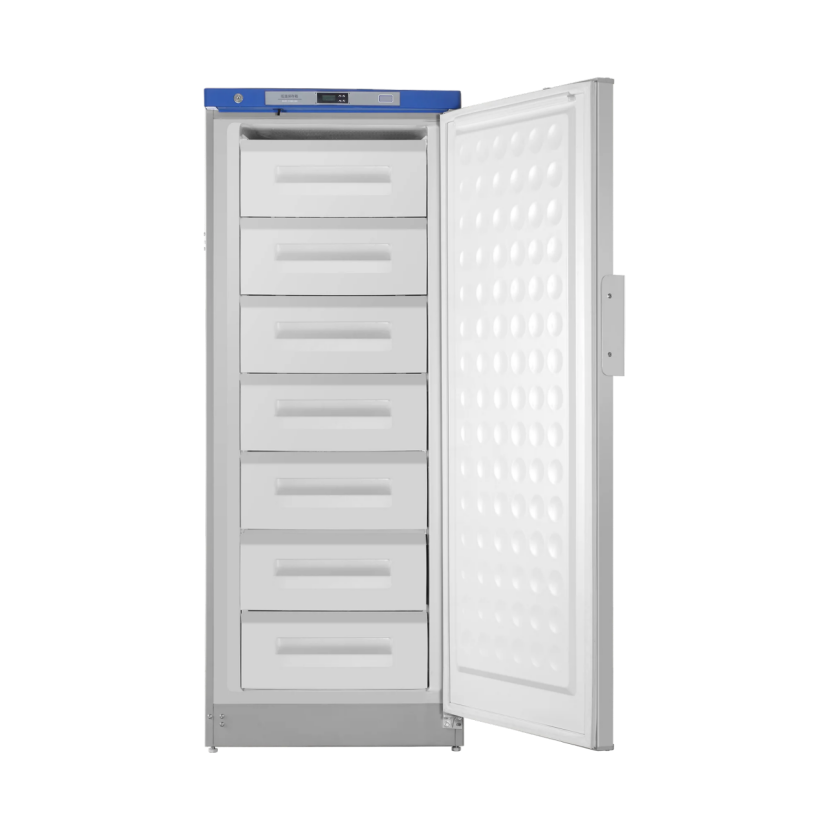
For individual researchers, small compounding pharmacy operators, and independent lab teams, proper cold storage of pharmaceutical and biological samples housed in vials, syringes, and ampoules is critical to preserving product efficacy and sample integrity. The unique physical properties of these three packaging formats create distinct challenges for pharmaceutical cold storage, as even minor missteps can compromise the safety and viability of cold storage pharmaceutical products and precious research samples. Unlike large-scale industrial facilities, small-scale end users require practical, actionable guidance to mitigate risks, with reliable cold storage solutions from providers like BPLabLine supporting consistent, compliant storage for these sensitive materials.
Precise, Stable Temperature Control for Sensitive Materials
The foundational consideration for pharmaceutical cold storage of vials, syringes, and ampoules is unwavering temperature precision and stability. Each packaging format holds cold storage pharmaceutical products with unique temperature requirements, ranging from 2–8°C pharmacy refrigeration for routine pre-filled syringes down to -150°C ultra-low temperature freezing for long-term sample storage in glass ampoules and sealed vials. Critical to this is tight temperature fluctuation control, limited to no more than 2°C, to prevent freeze-thaw cycles that can damage packaging seals or degrade active ingredients. 24/7 continuous temperature monitoring and emergency power backup are non-negotiable to avoid catastrophic loss of cold storage pharmaceutical products during outages. BPLabLine’s cold storage collection offers a full range of biomedical refrigerators, freezers, and cryogenic systems engineered to meet these strict pharmaceutical cold storage parameters for small-scale users.
Packaging Integrity Protection and Contamination Prevention
A second core consideration is safeguarding packaging integrity and preventing cross-contamination across vials, syringes, and ampoules. Glass ampoules are prone to cracking or shattering under extreme temperature shifts, while the rubber stoppers of vials and plunger seals of pre-filled syringes can degrade or leak when exposed to inconsistent cold conditions. Zoned storage within pharmaceutical cold storage units is essential to separate fragile ampoules from bulk vials and syringes, preventing cross-contamination if breakage occurs, and to segregate different types of cold storage pharmaceutical products to avoid mix-ups. Proper racking and secure storage fixtures also reduce the risk of physical damage to packaging during handling.
Core Guiding Principles for Compliant Cold Storage Management
At its core, successful cold storage of vials, syringes, and ampoules hinges on two non-negotiable pillars: consistent, precise temperature control for pharmaceutical cold storage, and proactive protection of packaging integrity to preserve cold storage pharmaceutical products. For individual and small-scale end users, these considerations translate directly to reduced product loss, compliant storage practices, and reliable research or clinical outcomes. BPLabLine’s end-to-end cold storage solutions are tailored to meet these needs, giving small teams access to the same level of protection for sensitive materials as large-scale facilities, without overcomplicated infrastructure.
