Battery recycling is moving from a niche activity toward a strategic part of the wider battery economy. As electric vehicles and energy storage systems expand, larger volumes of batteries will eventually require collection, testing, repurposing, and material recovery.
Scaling this industry requires more than recycling technology alone. Business models, battery design, disassembly methods, safety standards, policy incentives, and supply chain cooperation all influence commercial feasibility. Insights shared through a battery summit can help industry participants understand how these different factors need to work together.
Battery Recycling Is a Full-Lifecycle Challenge
Battery recycling begins long before an end-of-life battery reaches a recycling facility. Battery chemistry, pack structure, identification, testing, transportation, and dismantling can all affect the economics and efficiency of later processing.
The Battery Show Asia covers battery recycling and raw-material reuse, battery refurbishment and remanufacturing, second-life applications, and circular-economy solutions. This places recycling within the broader battery lifecycle rather than treating it as a separate waste-management activity.
For companies planning large-scale recycling operations, this lifecycle perspective is important when assessing future feedstock and processing requirements.
Better Recovery Technologies Can Improve Economics
Material recovery remains one of the central challenges in battery recycling. Different technologies can be used to separate and recover valuable materials, but their commercial performance depends on factors such as feedstock quality, chemistry, process efficiency, and recovered-material value.
The 2026 Battery Show Asia conference included a dedicated track on Battery Recycling and Sustainable Development. Sessions addressed chemical separation, direct recycling, closed-loop systems, and the recovery of battery materials.
These discussions highlight a key scaling issue: recycling capacity needs technologies that can deliver consistent results under commercial operating conditions, not only promising laboratory performance.
Direct Recycling Deserves Strategic Attention
Direct recycling is receiving increasing interest because it focuses on recovering battery materials while retaining more of their existing functional value. Its suitability can vary according to battery chemistry, material condition, process design, and downstream requirements.
The 2026 program specifically addressed direct recycling alongside chemical separation and closed-loop systems.
For manufacturers and recyclers, this makes technology comparison particularly important. The most suitable process depends not only on recovery rates, but also on input consistency, operating costs, scalability, and the quality of recovered materials.
Second-Life Applications Can Delay Final Recycling
Some batteries may still retain useful performance after leaving their original vehicle application. In suitable circumstances, these batteries can potentially be repurposed for stationary energy storage or other lower-demand applications before final recycling.
The conference program included sessions on repurposing EV battery packs, certification, testing, safety protocols, second-life energy storage projects, micro-grid integration, and lifecycle assessment.
Second-life applications add another step to battery lifecycle management. They also create additional requirements for testing and certification before retired batteries can enter a new use case.
Intelligent Disassembly Can Improve Scale
Battery packs can differ significantly in structure, materials, and assembly methods. Manual dismantling can become increasingly difficult as recycling volumes grow.
The 2026 recycling track included a presentation on intelligent battery disassembly planning with a knowledge-based system from A*STAR’s Advanced Remanufacturing and Technology Centre.
Automation and intelligent planning could become increasingly relevant as recyclers process greater numbers of battery designs. Standardized information and better battery identification could also make dismantling and sorting more systematic.
Policy and Business Models Influence Investment
Technology alone does not determine whether recycling capacity can scale. Collection systems, take-back requirements, incentives, ownership models, transportation rules, and cooperation between manufacturers and recyclers all affect investment decisions.
The Battery Show Asia’s recycling conference agenda included policy incentives, take-back schemes, OEM and end-of-first-life partnerships, government policies, and international collaboration.
A commercially viable recycling ecosystem therefore requires coordination between regulation and business operations. Investors need confidence that batteries will be collected, processed, and connected with stable downstream markets.
Supply Chain Resilience Is Becoming Critical
Battery recycling can strengthen the wider battery supply chain by recovering materials and reducing reliance on newly extracted resources. However, recycled feedstock must be collected and processed consistently enough to become a dependable industrial input.
The 2026 conference included a panel on circularity and supply chain resilience in the next decade of the global battery market.
This perspective links recycling directly with supply chain strategy. Stable collection networks and long-term cooperation between OEMs, recyclers, material producers, and technology providers can improve the predictability of recycled material flows.
What a Renewable Energy Exhibition Adds
Battery recycling is also becoming relevant to the renewable energy ecosystem. Repurposed EV batteries can potentially be used in stationary storage, while recycled materials can return to new battery production.
A renewable energy exhibition can therefore provide a useful complementary perspective by connecting battery lifecycle management with energy storage, grid applications, and renewable power deployment.
The Battery Show Asia operates alongside Energy Storage & Power Asia, creating opportunities to examine relationships between batteries, storage systems, power infrastructure, and new-energy applications.
Why The Battery Show Asia Matters
The Battery Show Asia brings battery manufacturing, energy storage, power and energy, and new-energy mobility into one international platform. Its exhibition scope includes battery recycling, energy storage systems, equipment and digital solutions, and new-energy mobility.
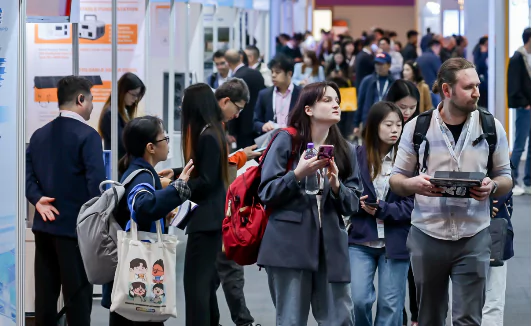
The 2026 event attracted 15,367 professional buyers from 103 countries and regions, while more than 200 exhibitors showcased over 1,000 technologies and products.
This cross-industry participation can help recycling companies identify technology partners, customers for recovered materials, second-life opportunities, and potential international collaborators.
Turning Conference Insights Into Scale
The future of battery recycling will depend on how effectively technology, economics, policy, and supply chain cooperation develop together. Recovery processes need reliable feedstock, second-life applications need clear testing pathways, and manufacturers need stronger connections with recycling partners.
A focused battery summit can help decision-makers monitor these developments and compare approaches across markets. The Battery Show Asia offers that wider industry context by placing recycling alongside battery manufacturing, energy storage, mobility, and power technologies.
For companies preparing to expand recycling capacity, the most valuable insight is that scale will not come from processing equipment alone. Strong collection networks, intelligent disassembly, viable business models, policy alignment, and reliable material markets will be equally important.
The next edition of the Battery Show Asia is scheduled for July 14–16, 2027, at AsiaWorld-Expo in Hong Kong, alongside Energy Storage & Power Asia and Mobility Tech Asia.
As battery deployment accelerates across transport and energy applications, recycling will become increasingly connected to the industry’s future resource strategy. The companies best positioned to scale will be those that treat recycling as an integrated part of the battery value chain rather than simply an end-of-life process.
