Dining furniture has a direct influence on how guests perceive a hotel’s restaurant, from the first impression of its interior to the comfort experienced throughout a meal. Beyond visual appeal, purchasing decisions involve durability, spatial efficiency, maintenance requirements, and the character of the dining concept.
Thoughtfully selected hotel dining furniture should complement the property’s design identity while supporting the practical demands of daily restaurant operations. Projects such as those developed by BFP Furniture also demonstrate how color coordination and material choices can shape a distinctive hospitality environment.
Assessing Design Identity and Interior Coordination
A restaurant’s visual character should reflect its location, target clientele, and overall hospitality concept. Contemporary business hotels may favor understated finishes and clean silhouettes, whereas resort properties often incorporate warmer colors and more expressive decorative elements. Furniture should contribute to this identity without making the interior feel visually crowded.
Color selection deserves particular attention because large furniture surfaces can influence the atmosphere of an entire dining area. Dark wood tones often create a sense of warmth and intimacy, while lighter finishes can make compact interiors appear more open. Upholstery, wall treatments, flooring, and decorative lighting should also be considered together rather than selected independently.
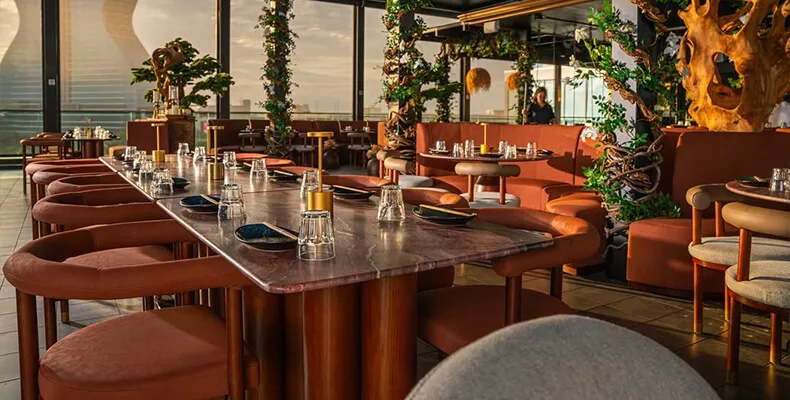
The G7 Restaurant at Dolce Hotel by Wyndham in Miami offers an interesting example of coordinated hospitality design. Its reddish-brown and deep-brown color palette creates a sophisticated visual atmosphere, demonstrating how carefully balanced tones can establish an elegant restaurant identity. This BFP Furniture project illustrates the relationship between furniture finishes and the wider interior environment without relying on excessive decoration.
Evaluating Comfort, Layout and Practical Functionality
Guest comfort depends on more than the appearance of individual chairs. Seat height, depth, backrest angles, and cushioning all influence how comfortably visitors can remain seated during a meal. Restaurants serving business travelers or hosting social gatherings may need seating arrangements that accommodate longer dining sessions.
Table dimensions should correspond to the restaurant’s menu and service style. A breakfast venue may require practical surfaces with sufficient space for plates, beverages, and buffet selections, while a fine-dining establishment may prioritize generous spacing between individual settings. Appropriate proportions also give restaurant staff enough room to serve guests without repeatedly disturbing neighboring tables.
Circulation planning is another essential consideration. Dining layouts should account for chair movement, service stations, accessible pathways, and the movement of guests carrying food or beverages. Flexible table configurations can be particularly useful in venues that regularly accommodate different party sizes. Well-planned hotel restaurant furniture should support these activities while maintaining a comfortable relationship between occupied and shared spaces.
Comparing Material Performance and Maintenance Requirements
Frequent use places considerable pressure on restaurant furniture. Table surfaces encounter spills, hot dishes, cleaning agents, and repeated contact with utensils, while chairs experience continuous weight-bearing and movement. Material specifications should reflect these conditions rather than focusing exclusively on initial appearance.
Wood-based panels, solid wood, metal, and upholstered materials each have different performance characteristics. Wood finishes can introduce natural warmth, but their suitability depends on surface protection and moisture resistance. Metal frames may provide structural stability, while commercial-grade upholstery needs to balance comfort with cleaning convenience. The appropriate combination depends on the restaurant’s operating frequency and maintenance capacity.
Environmental compliance is also relevant to hospitality purchasing. CARB P2 and E0/E1 address formaldehyde emissions, while REACH establishes requirements concerning chemical substances. Hotels sourcing furniture for international projects should review relevant compliance documentation and material specifications. Such assessments contribute to healthier indoor environments and more informed procurement decisions.
Reviewing Manufacturing Quality and Supplier Capabilities
Furniture specifications provide an important starting point, but actual manufacturing quality determines how products perform after installation. Purchasing teams should examine structural connections, load-bearing capacity, surface consistency, edge treatments, and dimensional accuracy. Pre-production samples and factory inspection records can help identify differences before large quantities enter production.
BFP Furniture incorporates these considerations into its hospitality furniture manufacturing and quality assurance processes. Its inspections cover load-bearing performance, durability, wear resistance, and environmental factors, while its stated material standards include CARB P2, E0/E1, and REACH. Warranty coverage ranges from two to five years depending on the furniture category, offering purchasing teams a reference for evaluating after-sales arrangements.
Project coordination deserves equal consideration, particularly for hotels with multiple dining venues. Delivery schedules, packaging methods, installation requirements, replacement-part availability, and communication procedures can all affect project execution. A supplier’s ability to manage these details is worth assessing alongside product pricing and design capabilities.
Making Furniture Decisions with Long-Term Value in Mind
The purchase price represents only one part of the overall investment. Cleaning expenses, repair frequency, replacement requirements, and the expected service life of individual pieces can significantly influence long-term operating costs. Furniture with suitable construction and maintainable finishes may offer better value than options selected primarily for their initial affordability.
A clear procurement checklist helps hotel operators compare different suppliers objectively. Dimensions, material specifications, environmental documentation, testing records, warranty terms, and delivery conditions should all be reviewed before final approval. This approach also makes it easier to maintain consistency when several restaurant areas are furnished within the same property.
Ultimately, successful dining environments emerge from decisions that connect design intention with operational reality. From the warm color coordination seen at the G7 Restaurant in Miami to considerations surrounding durability and environmental compliance, hotel dining furniture plays an important role in shaping both atmosphere and everyday functionality. With its hospitality project experience and manufacturing quality procedures, BFP Furniture provides another reference for evaluating how hotel restaurant furniture can contribute to a cohesive and practical dining environment.
