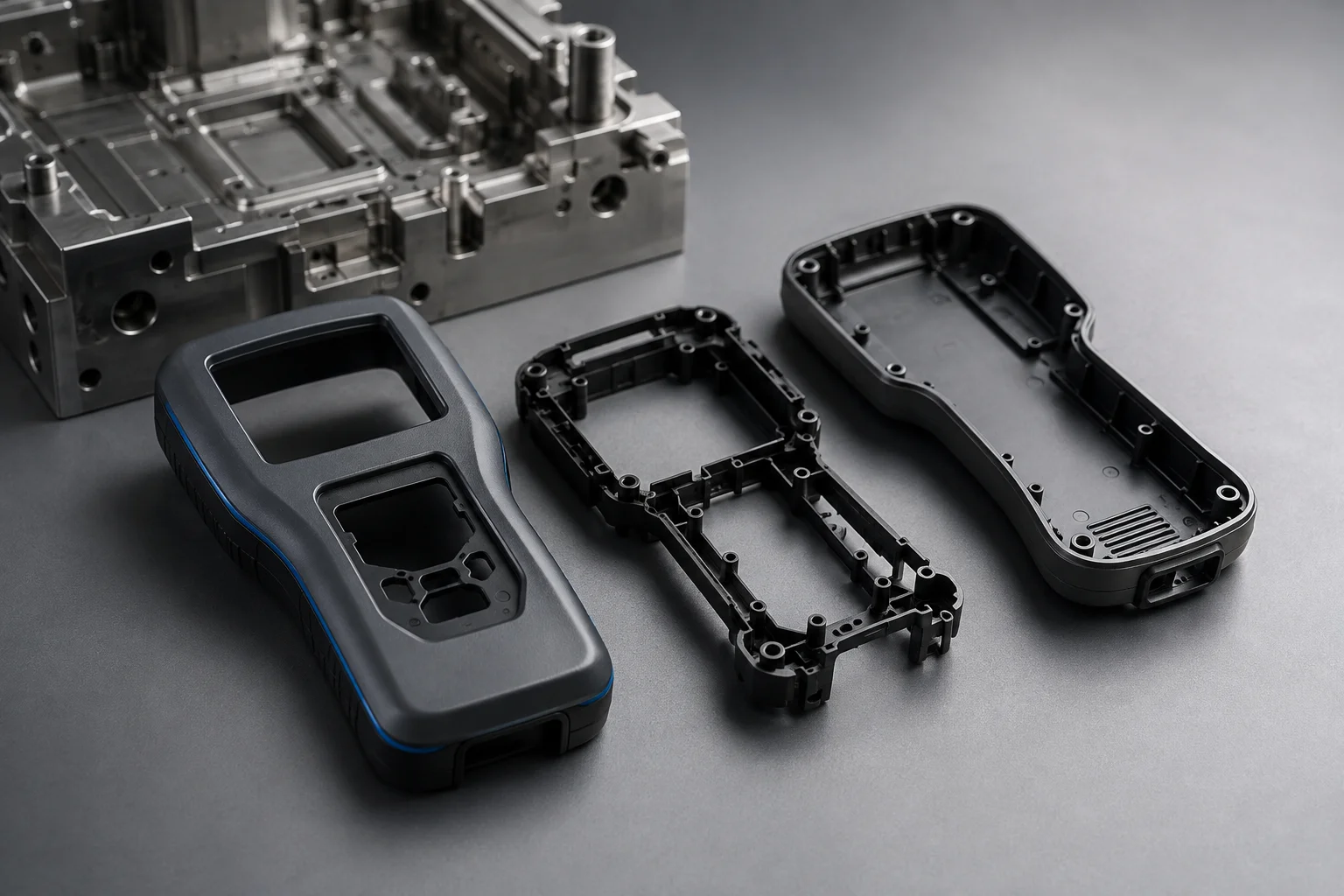
A successful plastic part rarely begins and ends with the injection molding machine. Before production starts, the design must be reviewed, the right material must be selected, tooling must be developed, and potential manufacturing risks must be addressed. After molding, inspection, finishing, assembly, and delivery all influence whether the final component is ready for its intended application.
This is why choosing the right custom injection molding services means looking beyond molding capacity alone. A full-service manufacturing partner should be able to connect engineering, tooling, production, quality control, and delivery into one coordinated process. HordRT provides this integrated approach, supporting projects from design review and rapid tooling to injection molding, inspection, and production delivery.
Start with Engineering, Not Just a Mold
A strong injection molding project starts with the part design. Features such as wall thickness, draft angles, ribs, bosses, undercuts, material selection, and tolerance requirements can all affect moldability, tooling cost, cycle time, and final part performance.
HordRT begins projects with design and DFM review. Its engineering team evaluates CAD files, identifies potential manufacturing risks, and provides recommendations before tooling begins. This early review can help identify issues when they are still relatively easy to address rather than after a mold has already been manufactured.
For product teams developing a new component, this engineering involvement can also make communication more efficient. Instead of translating requirements between separate designers, mold makers, and production suppliers, the project can move through a connected technical workflow.
Material Selection Should Match the Application
Material selection is another important part of custom injection molding. The lowest material cost is not necessarily the right choice when a component must withstand heat, chemicals, impact, repeated loading, or demanding environmental conditions.
HordRT evaluates factors such as mechanical strength, operating temperature, chemical exposure, appearance, regulatory requirements, and cost when helping select plastic materials. Its injection molding capabilities cover general purpose plastics, engineering resins, elastomers, glass filled materials, and selected medical grade materials.
This approach allows material decisions to be considered together with part geometry and application requirements rather than treated as a separate purchasing decision.
Tooling Connects Design with Production
For injection molded parts, tooling is the bridge between a digital design and repeatable production. Mold construction, cooling, ejection, venting, and cavity configuration can all influence part quality and production efficiency.
HordRT offers prototype, bridge, and production tooling, with rapid tooling options that can support design validation and low volume manufacturing. Its published process indicates typical rapid tooling lead times of approximately 10 to 15 days after design approval, although complex geometry, special steels, multi cavity designs, and demanding cosmetic requirements may require additional time.
Tool validation is also treated as a separate stage rather than an afterthought. HordRT evaluates initial samples, reviews dimensions and appearance, identifies tooling or process issues, and can make corrective adjustments before production release.
Production Needs More Than Machine Capacity
Once tooling is approved, consistent injection molding depends on controlled material preparation, filling, holding, cooling, ejection, and inspection. HordRT describes its molding process as a controlled sequence from mold installation and material preparation through injection, cooling, ejection, and inspection.
Its manufacturing infrastructure includes a 42,000 square meter Zhuhai facility dedicated to areas including rapid tooling, plastic injection molding, compression molding, and assembly. HordRT also reports more than 1,800 mold sets of annual capacity across its operations and more than 350 employees.
For projects that may evolve from prototype quantities into repeat production, having tooling and molding capabilities within the same manufacturing network can simplify the transition between development stages.
Inspection Should Continue Through Production
Quality control is most effective when it is integrated into the manufacturing process rather than performed only after production is complete. Incoming materials, first articles, in process dimensions, appearance, and final parts may all require different inspection methods.
HordRT’s quality process includes requirement review, incoming material inspection, first article inspection, in process quality control, final inspection, and documentation. Depending on project requirements, inspection can include CMM measurement and blue light 3D scanning for complex geometries and surface deviations.
This structured approach provides measurable information that can support tooling corrections, production approval, and repeat manufacturing.
Finishing and Delivery Complete the Manufacturing Process
A molded component may still require secondary operations before it becomes a production ready part. Depending on the application, requirements can include surface finishing, assembly, marking, or other downstream processes.
A full service provider should therefore consider what happens after molding. HordRT operates multiple manufacturing processes, including injection molding, CNC machining, die casting, sheet metal fabrication, silicone molding, and assembly, allowing different manufacturing requirements to be coordinated through one supplier.
The final stage is delivery. HordRT’s stated workflow extends from project submission and DFM review through manufacturing, quality inspection, packaging, delivery, and ongoing engineering support.
Why HordRT for Custom Injection Molding Services?
The value of a full-service partner lies in how well each manufacturing stage connects with the next. HordRT combines engineering review, tooling, injection molding, validation, quality inspection, and related manufacturing capabilities within one coordinated workflow.
With manufacturing operations in Zhuhai and Zhongshan, HordRT supports projects ranging from prototypes and tooling validation to repeat production. Its broader capabilities also make it possible to coordinate plastic molding with machining, die casting, sheet metal fabrication, and other processes when a product requires multiple types of components.
For companies developing new products or managing ongoing component production, the right custom injection molding services should provide more than molded parts. They should provide technical communication, manufacturing visibility, quality control, and a practical path from the first CAD file to production ready components.
With HordRT, that process is designed around one connected manufacturing workflow, helping turn complex part requirements into production with greater coordination and engineering support.
